

Product Comparisons and Disparaging Content
07/03/2025
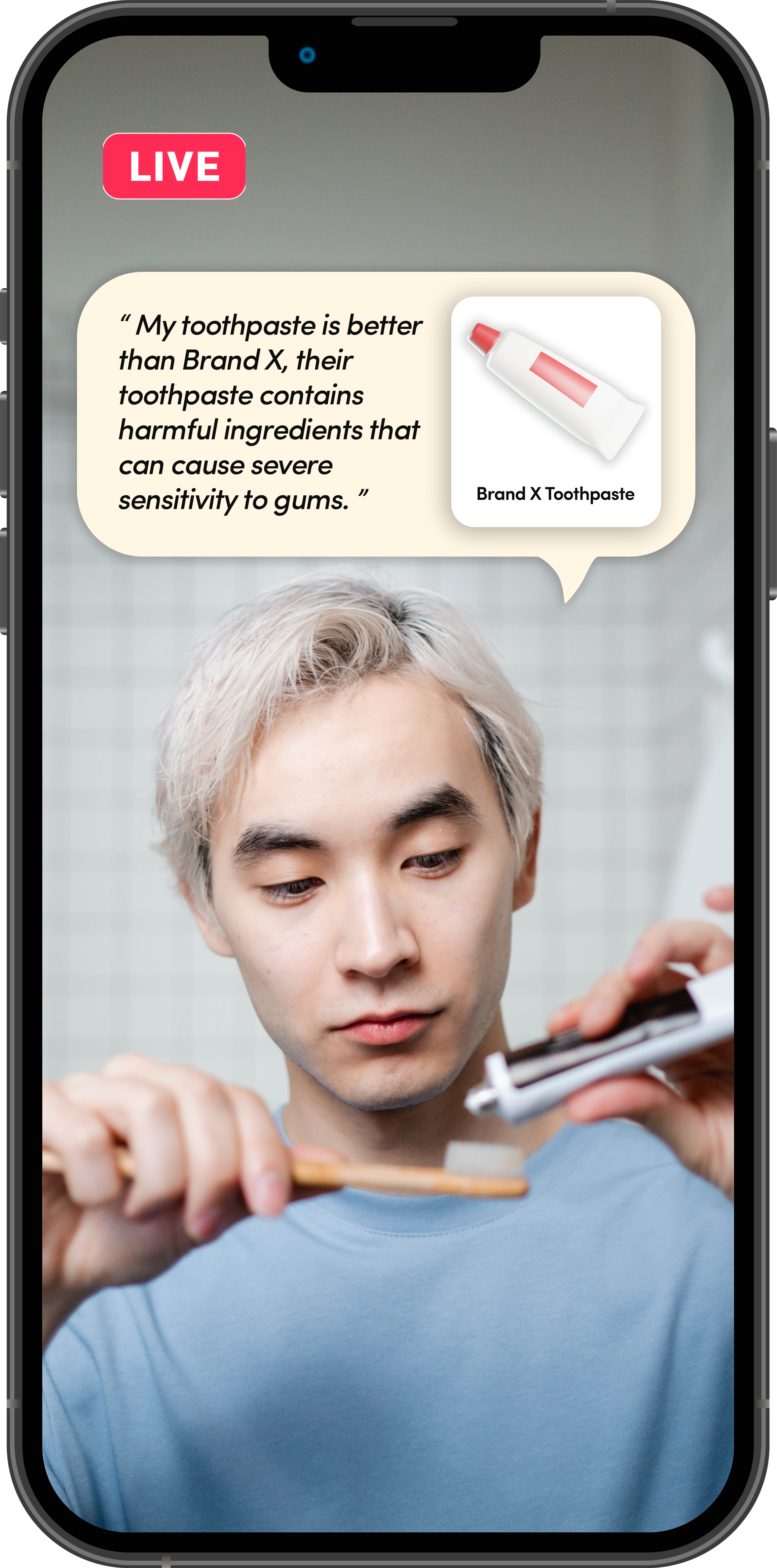
All content must not contain any malicious comparisons or disparaging comments targeted at other products, brands or e-commerce sites. Below are some examples of misleading product comparisons and disparaging content:
Product Comparisons
- Malicious comparisons on product functionality, effect, price or other attributes with other branded products such as:
- Deliberately use derogatory words to describe third-party brand products. For example, ABC Product (third-party) is harmful to health.
- Expressing negative feeling or conducting negative behavior on the other branded products. For example, throw ABC product (third-party) into the trash.
What happens if I breach these guidelines?
If you are found to violate these guidelines, you may have enforcement actions taken against your account. You should note that repeated offenses will result in more significant penalties. please see our Violation Reasons, Points & Enforcement Actions for Creators article and Creator Terms of Service for more information. If you think an enforcement action has been taken against you in error, appeal via the TikTok App. Please read our Creator Appeal Guidelines article for more information.Please read our TikTok Shop by Tokopedia Content Guidelines to learn more.FAQs
How can I avoid Misleading Content?- Provide accurate details about your product, including size, material, origin, and effects.
- Do not exaggerate or make false product claims.
- If mentioning awards, certifications, or affiliations, ensure they align with product packaging and provide proof when needed.
- Don't negatively compare or disparage other brands to promote yours.
- Be honest about your personal experience with the product
- Focus on clear and factual information about your product's strengths, features, and benefits. Use data and evidence to support your claims.
- Ensure your product listings provide accurate information and include relevant details. Consider using disclaimers when appropriate, such as "Individual results may vary"